
Solitude is an Art
#101 - Why Being Alone and Being Lonely are Not the Same Thing

Solitude is not peaceful. It is hearing your own mind for so long that eventually there is nowhere left to hide from yourself.
People romanticise solitude because they imagine silence, mountains, books, slow mornings, and spiritual clarity. Real solitude rarely begins that way. Real solitude begins as absence. A phone that stops ringing. Invitations that slowly disappear. Rooms that become quieter year after year until the silence no longer feels temporary.
Loneliness is the pain of unwanted solitude. Solitude is the practice of chosen aloneness.
One weakens you and the other rebuilds you, but nobody tells you that the transformation between the two is violent.
Because when solitude is forced upon you by crisis, failure, betrayal, illness, or simply a long season where life withdraws from you, it does not feel spiritual. It feels like exile.
And the art is in turning exile into initiation.
Most people spend their lives trying to avoid that moment. They fill every gap with activity, every silence with noise, and every uncomfortable thought with distraction. They stay moving because movement feels safer than stillness. As long as something is happening around them, they never have to sit long enough with themselves to discover what is happening within them.
But eventually, life has a way of removing the exits.
Sometimes it arrives through crisis. Sometimes through loss. Sometimes through betrayal. Sometimes, through a season so long and quiet that you slowly realise the world is no longer making the same demands of your attention.
When that happens, you are left with the one person you have spent the least amount of time understanding.
Yourself.
And that encounter is rarely comfortable in the beginning.
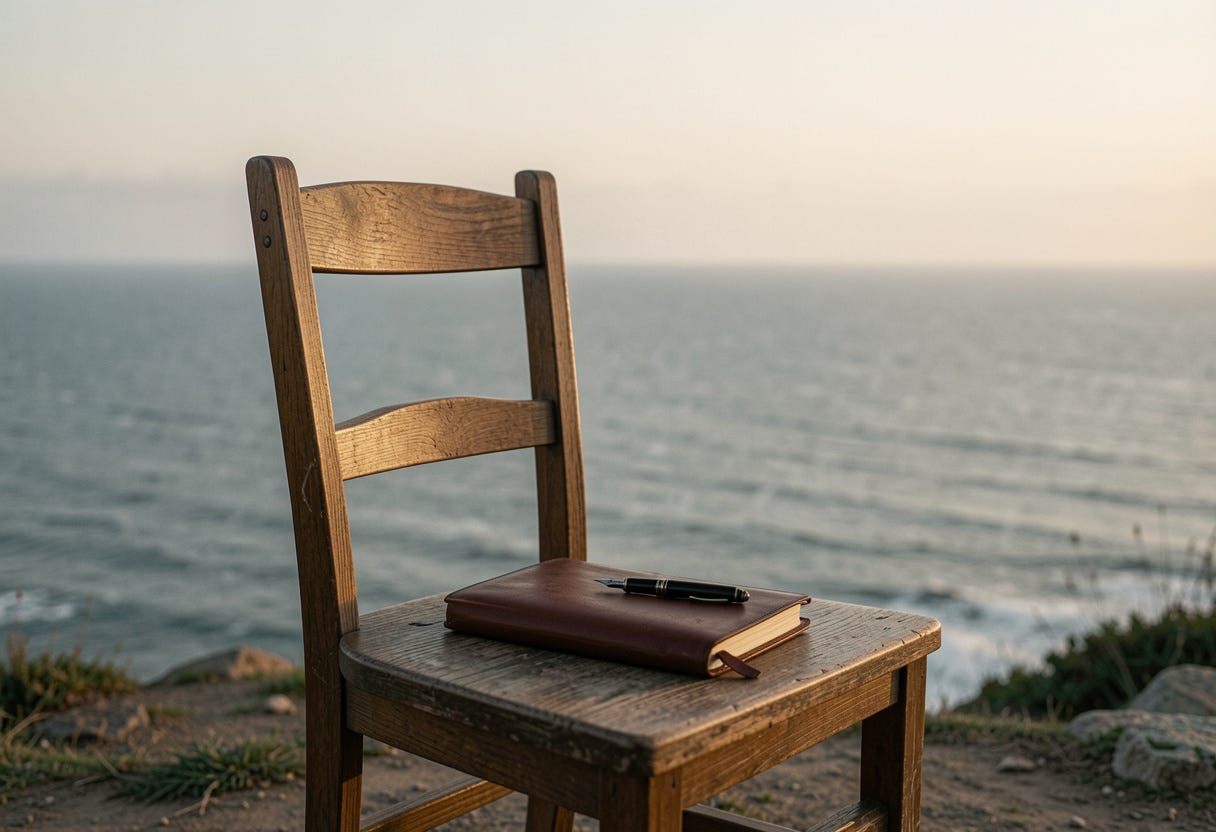
A Decade Alone
I did not choose my solitude. A decade of crisis chose it for me.
People leave slowly at first, then all at once. Calls shorten. Messages become formal. The world moves on with remarkable efficiency while you are still trying to understand what happened.
That is the hardest part of prolonged loneliness. It is not the silence that hurts most. It is the feeling of irrelevance.
You begin to realise how much of human connection is built around momentum, utility, proximity, and convenience. When your life stops moving smoothly, many people quietly continue theirs without you in it.
There is rarely an announcement. There is rarely a confrontation. There is rarely a dramatic ending.
People simply drift toward functioning systems and away from struggling ones.
That realisation can be painful because it forces you to distinguish between relationships built on circumstance and relationships built on commitment. Some people were there because life made it easy. Some were there because your paths happened to overlap. A few were there because they genuinely cared.
Crisis reveals the difference.
In the beginning, solitude feels unbearable because you are still resisting it. You replay old conversations. You revisit old wounds. You wait for people to return. You imagine explanations that will repair everything. You keep one part of your attention permanently fixed on the past, hoping reality will eventually reverse itself.
It does not.
People do not return simply because you miss them.
And eventually exhaustion accomplishes what wisdom could not.
You stop waiting.
That is when solitude begins, not when you are left alone, but when you stop fighting being alone.
The loneliness does not disappear immediately. The room does not suddenly become warmer. The silence does not become easier overnight. What changes is that you stop negotiating with reality. The energy that was once spent resisting begins returning to you.
The door remains closed.
You simply stop expecting it to open.
What Silence Reveals
Most people cannot sit quietly by themselves for more than a few minutes.
They reach for noise immediately, whether it is phones, conversations, distractions, validation, movement, or entertainment. Anything that prevents uninterrupted contact with their own mind becomes attractive.
Solitude removes that escape.
And slowly, painfully, it introduces you to yourself.
Not the version built for public consumption. Not the rehearsed identity designed for social rooms. Not the carefully managed personality created to fit expectations.
The real one.
The person underneath the performance.
You learn what you value when nobody is watching. You learn which ambitions were yours and which were borrowed. You learn how much of your personality was adaptation. You learn what drains you, what restores you, and what still matters after applause disappears.
That knowledge cannot be acquired socially.
It only arrives in silence.
The modern world has become remarkably efficient at helping people avoid themselves. There is always another screen, another conversation, another notification, another distraction. Constant stimulation creates the illusion of connection while often preventing genuine self-understanding.
Silence does the opposite.
It removes the buffer.
And when there is no buffer left, honesty becomes unavoidable.
Many people fear solitude because they fear what they will discover. But what waits underneath is usually not as frightening as the effort required to keep avoiding it.
The Single Malt and the Silent Years
A blended whisky is designed for consensus. Balanced. Softened. Predictable. Built to offend nobody.
A single malt is different.
It carries the character of one distillery, one climate, one water source, one process, and one set of imperfections. Nothing added to smooth its rough edges for wider approval.
Its identity comes from isolation.
And solitude does the same thing to people.
After enough years alone, you stop becoming socially optimised. You stop adjusting yourself constantly for acceptance. The performance weakens. The unnecessary parts fall away.
What remains is harder, cleaner, and entirely your own.
That is either terrifying or liberating, depending on how honest you are willing to be with what you find.
A great single malt does not apologise for its character. It does not dilute itself to achieve broader approval. It carries its own identity completely.
The longer I spent in solitude, the more I realised that much of what we call personality is often negotiation. We adjust language, preferences, opinions, and ambitions to fit environments and expectations.
Solitude interrupts that negotiation.
Eventually, you stop asking who other people need you to be.
And you start asking who you actually are.
Eklavya’s Forest
Eklavya was denied the teacher he wanted.
No school. No mentorship. No validation. No place within the accepted system.
So he walked into the forest alone and taught himself.
While others learned in groups, he learned in silence. While others depended on instruction, he depended on discipline.
And when Dronacharya finally saw what Eklavya had become, he recognised something uncomfortable.
The student shaped in solitude had surpassed many shaped in company.
The forest did not limit Eklavya. It made him.
That story survives because it speaks to something universal.
We imagine growth arriving through ideal circumstances, ideal mentors, ideal opportunities, and ideal support. Life rarely offers ideal conditions.
Sometimes the forest is all you get.
And sometimes the forest becomes the very thing that teaches you what no classroom ever could.
What Solitude is Not
Solitude is not withdrawal from life.
Isolation is a wound. Solitude is a practice.
The isolated person runs from the world. The solitary person returns to themselves and re-enters the world stronger.
I did not spend my years alone doing nothing.
I read. I built. I wrote. I sat in temples where the silence felt older than history itself. I travelled through cities where nobody knew my story. I poured whisky into empty rooms and learned that peace does not always arrive as happiness.
Sometimes it arrives as clarity.
And clarity changes everything.
One of the great misconceptions about solitude is that it makes people less connected to the world.
The opposite is often true.
When you stop needing constant validation, your relationships become cleaner. When you stop fearing silence, conversations become more meaningful. When you stop performing, authenticity becomes possible.
Solitude is not separation from life.
It is preparation for engaging with life differently.
What I Tell People Now
Do not wait for a crisis to introduce you to yourself.
Choose solitude before life imposes it on you.
Never permanently. Not theatrically. Nor as an escape.
But deliberately.
Sit alone without distraction. Walk without noise. Eat without stimulation. Spend time without performing for anyone.
Learn whether your own company is a prison or a home.
Because the people most at ease in this world are not the most admired, connected, or celebrated.
They are the people who are comfortable alone.
That comfort cannot be purchased. It cannot be borrowed. And it cannot be outsourced.
It must be developed slowly through repeated encounters with yourself.
Mastery Here is Different
Mastery in solitude is not becoming detached from humanity.
It is becoming whole without constantly needing humanity to confirm your worth.
It is the ability to sit in silence without immediately reaching for escape. It is the ability to remain with yourself long enough that the noise settles and something honest begins to emerge.
That takes time. Sometimes years. Sometimes a decade.
Because solitude does not always give you happiness.
Sometimes it gives you clarity.
And after enough suffering, clarity becomes its own form of peace.
You are no longer lonely. You are no longer abandoned. You are no longer waiting to be rescued.
You are simply whole.